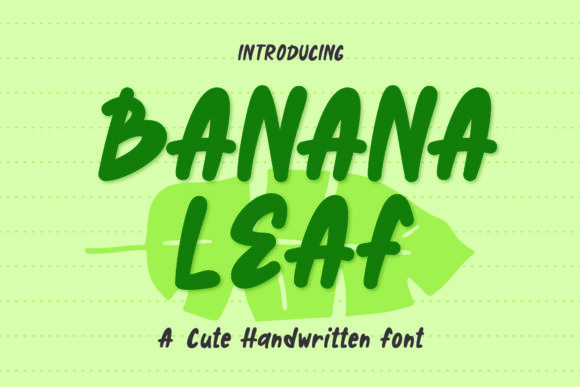
Banana Leaf: A Handwritten Font for Modern Web and Digital Design
Banana Leaf is more than a decorative script font—it's a versatile typeface that brings a sense of warmth and personality to digital projects. As a web designer, I’ve found that its casual, handwritten style works exceptionally well in layouts where approachability and creativity are key. Whether used in a hero header, product landing page, or boutique online store, Banana Leaf adds a human touch that resonates with users.
Understanding the Style and Personality of Banana Leaf
Banana Leaf is a Script Amp font with a natural flow and organic texture. It mimics real handwriting, with slight imperfections that make it feel authentic rather than overly polished. This quality makes it ideal for brands that want to communicate sincerity, creativity, or artisanal craftsmanship. Unlike rigid sans serif fonts, Banana Leaf introduces a sense of motion and fluidity to the design, making it stand out in a digital space where minimalism often dominates.
Its strokes vary in weight, and the ligatures and alternate characters offer flexibility in how text is displayed. This helps avoid repetition, especially in logo design or repeated headers across a site. The font has a softness that pairs well with both bright and muted color palettes, making it suitable for a wide range of brand identities—from wellness coaches and lifestyle bloggers to indie product shops.
Practical Uses in Web and Digital Design
In web design, Banana Leaf shines when used strategically. It’s best suited for short-form text such as headers, call-to-action buttons, and branding elements. Due to its decorative nature, it’s not ideal for long blocks of body copy. However, as a display font, it can elevate hero sections, landing page titles, or social media graphics where visual impact is crucial.
- Use it in a hero header to introduce a creative portfolio or personal brand.
- Apply it to a call-to-action button on a course sales page to draw attention without being overbearing.
- Pair it with a clean sans serif font in an online shop banner to highlight product names or special offers.
- Implement it in blog headers to create a warm, inviting tone for readers.
Its flexibility allows it to blend into both modern and vintage design aesthetics, making it a strong contender for editorial design, packaging design, and even digital ads where brand tone needs to feel personable yet professional.
Readability and Visual Hierarchy
When integrating Banana Leaf into a digital layout, readability is key. While it’s not a font for body text, it performs well at larger sizes where clarity and impact matter. For web design, I recommend using it at 24px or larger for headers and 16px or above for accent text like button labels.
On mobile screens, especially in responsive layouts, ensure the font scales appropriately. Avoid using it on small buttons or image overlays with complex backgrounds. If using it over a photo or gradient, increase contrast with a dark or light text shadow to maintain legibility.
For visual hierarchy, Banana Leaf can serve as a primary header while a simpler font like a serif or sans serif handles subheadings and body content. This creates a layered effect that guides the user’s eye through the layout while maintaining brand consistency.
Font Pairing for Web Design
Pairing Banana Leaf with a clean, modern sans serif like Open Sans or Montserrat helps balance its organic style with structured readability. Alternatively, for a more editorial or luxury feel, pairing it with a serif font like Playfair Display or Merriweather adds a touch of elegance.
When designing a landing page or digital product, use Banana Leaf for headlines and switch to a neutral font for supporting content. This maintains a cohesive design while leveraging the font’s expressive qualities where they’re most effective—such as in branding, logo design, or social media graphics.
Technical Considerations for Web Use
Before implementing Banana Leaf in a live project, check the available file formats. Most premium fonts include WOFF, WOFF2, TTF, and EOT formats for optimal browser compatibility. Ensure that the font supports webfont embedding and that all necessary styles and weights are included.
Also, verify if the font has alternate characters, ligatures, and multilingual support. These features can be crucial for international brands or for customizing text appearance in logo design or packaging design contexts.
Licensing for Commercial Use
When using Banana Leaf in a client project, online store, or digital template, confirm that the font is licensed for commercial use. Some free fonts have restrictions, but many premium fonts from design asset platforms include commercial licenses that cover websites, landing pages, and brand assets.
Always read the license agreement to ensure compliance, especially if you’re embedding the font in a downloadable product or SaaS platform. Proper licensing not only protects you legally but also supports the designers behind the typeface.
Final Thoughts
Banana Leaf is a thoughtful addition to any digital designer’s toolkit. Its handwritten charm, combined with strong visual appeal, makes it a standout choice for creative branding, web design, and digital marketing assets. When used with intention—whether in a hero section, CTA button, or logo design—it enhances the user experience without compromising readability or brand identity.